
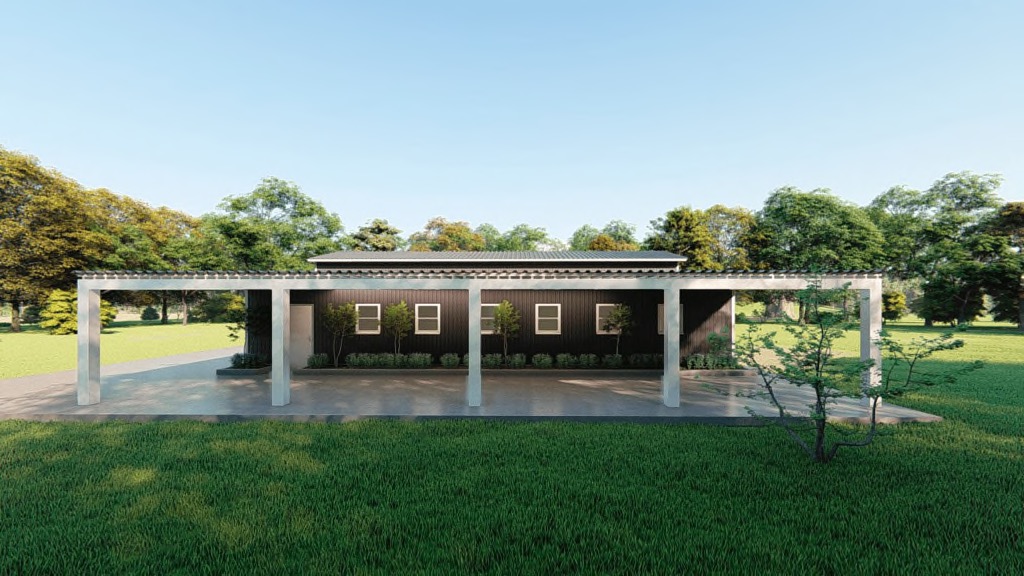
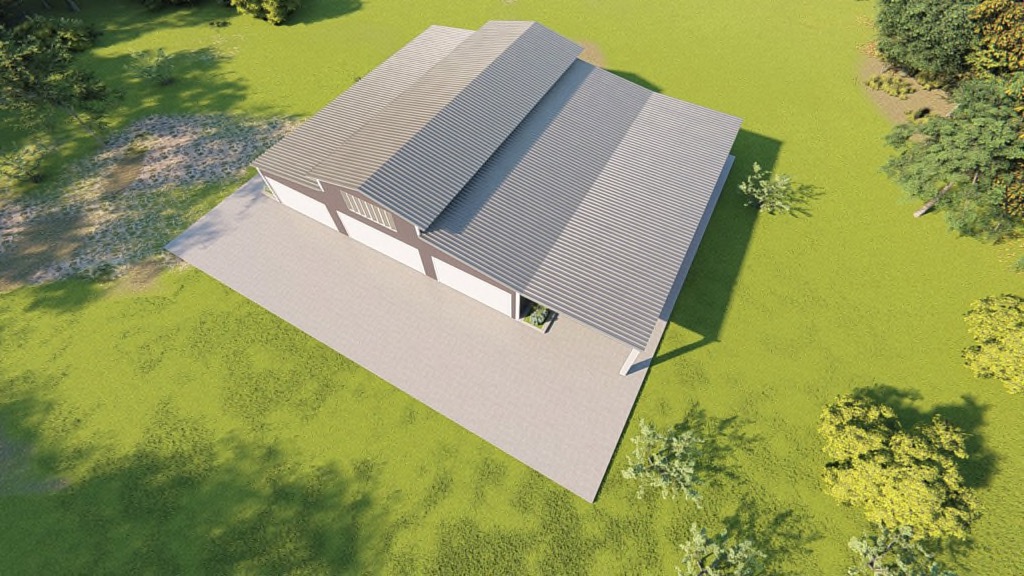


Common Barndominium Kit Sizes

Image Credit: Green Building Elements

Image Credit: Green Building Elements

Image Credit: Green Building Elements

Image Credit: Green Building Elements

Image Credit: Green Building Elements

Image Credit: Green Building Elements
60x60 Barndominium Kit
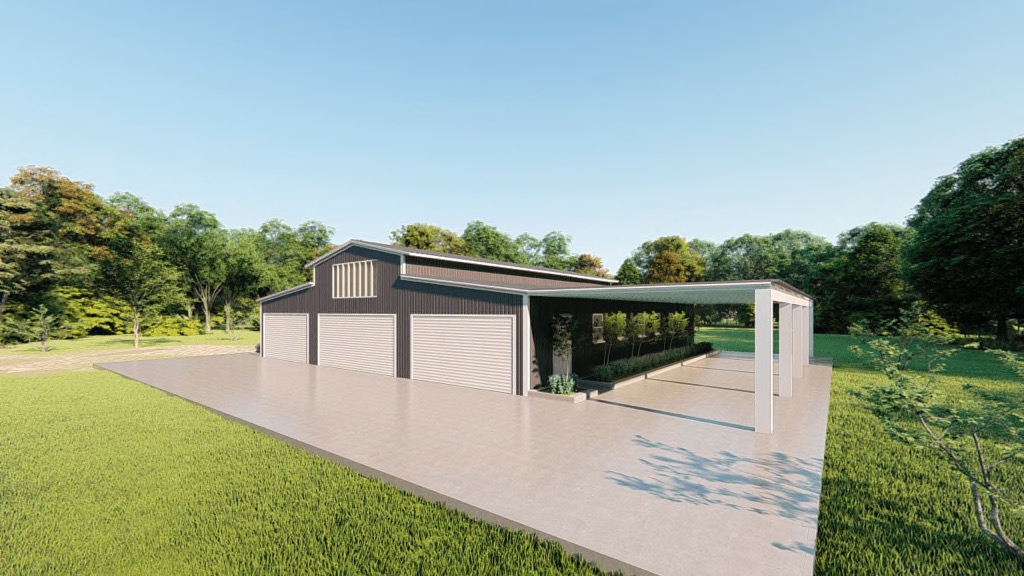
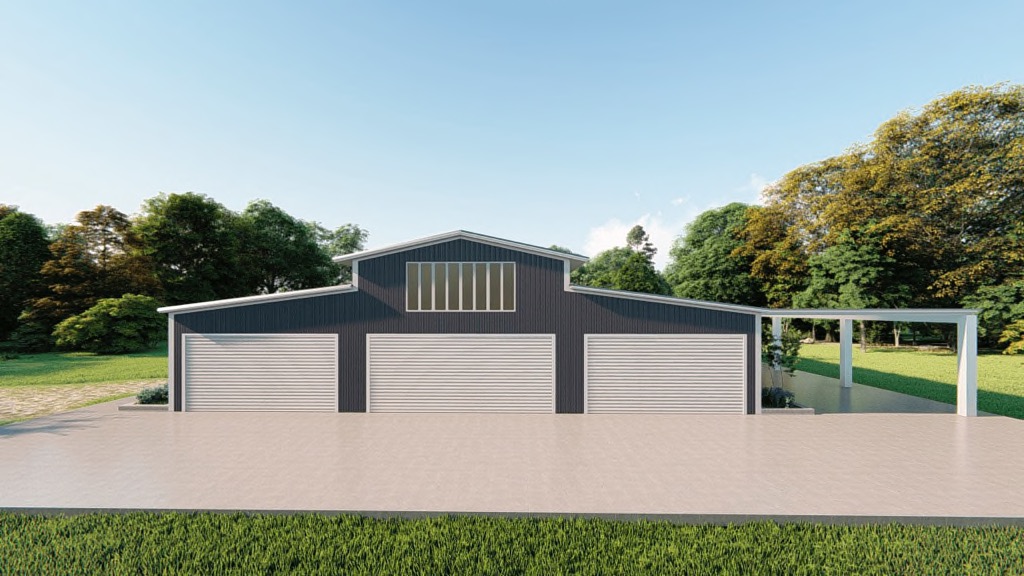
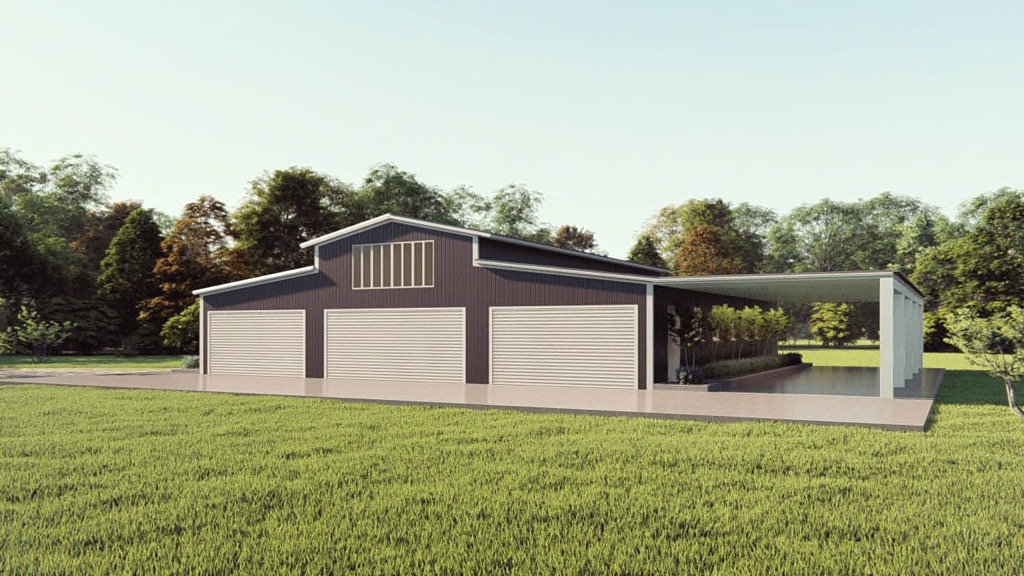
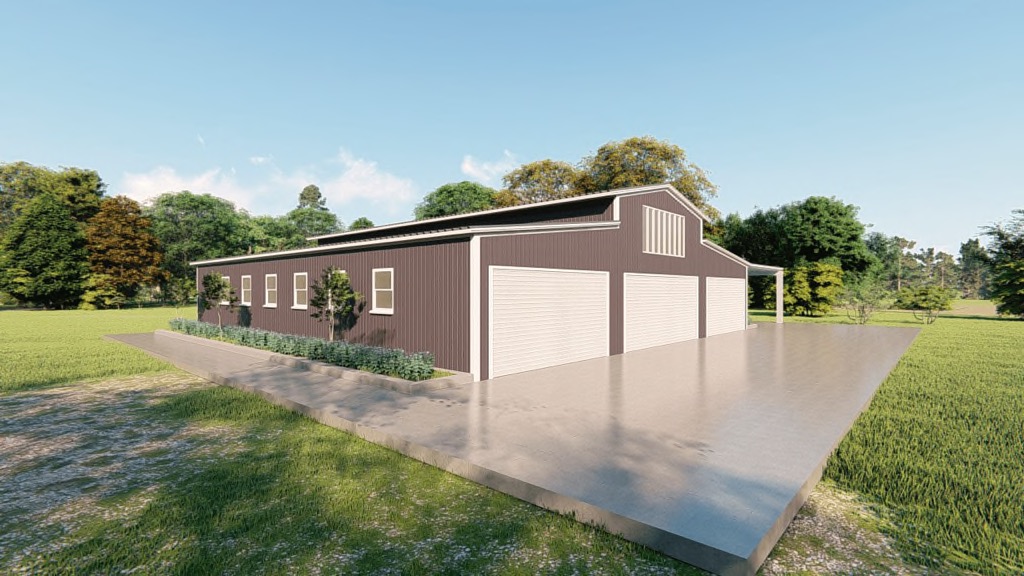
One of the largest barndominium kits, the 60×60 barndominium is suitable for most purposes, like equipment and vehicle storage, as well as ample living spaces too.

Image Credit: Green Building Elements

Image Credit: Green Building Elements

Image Credit: Green Building Elements

Image Credit: Green Building Elements

Image Credit: Green Building Elements

Image Credit: Green Building Elements
40x75 Barndominium Kit
A 40×75 barndominium could be large enough to give you several bedrooms, as well as enough space to store a few vehicles or things like farm equipment.

Image Credit: Green Building Elements

Image Credit: Green Building Elements

Image Credit: Green Building Elements

Image Credit: Green Building Elements

Image Credit: Green Building Elements

Image Credit: Green Building Elements
40x60 Barndominium Kit
A 40×60 barndominium is large enough for 4-5 bedrooms, as well as providing you ample storage for your equipment and your vehicles, with 2,400 sq ft to utilise.

Image Credit: Green Building Elements

Image Credit: Green Building Elements

Image Credit: Green Building Elements

Image Credit: Green Building Elements

Image Credit: Green Building Elements

Image Credit: Green Building Elements
30x40 Barndominium Kit
A 30×40 barndominium will usually give you enough space for approximately 2 to 3 bedrooms, which you can also use for your general storage or even for vehicles too.
What's In This Article
What Is a Barndominium?
Just like Hollywood enjoys smashing two words together, it seems the building community has now done the same by creating a new way to describe using a barn building kit for a home.
Termed “Barndominiums” or “Barndo” for short, these buildings are a rapidly-growing segment of North American building trends. While they can easily be made from a wooden kit, steel building kits specifically made for barndominiums are also growing in popularity for their many features and benefits which make their construction streamlined and cost-efficient.
A barndominium is simply a barn-like structure that is converted into a living space, office space, or anything suitable for residential, business use or both.
Barndominiums can be quite sophisticated in their design and may have features that rival even luxury homes. Their open and free internal space is a big crowd-pleaser and makes for some really creative design & architecture.
Metal barndominium kits are a type of steel home kits that are made with prefab steel construction and are the most popular method of construction, and the main focus of this guide.
Prefab construction simply means that the components of the structure are prefabricated before being shipped to the building site.
Like all home kits, the components are designed to fit together with relative ease, greatly simplifying the overall construction process, though depending on how you’re going to use the space, you still may have to consider insulation, heating, wiring, plumbing.
Barndominiums are versatile cost-efficient structures, but there’s a lot to think about before building one.
Barndominium Kit Prices
The price you will pay for a barndominium relies on a multitude of factors, including dimensions, interior, options, insulation, and more. You can find a basic barndominium shell for around $10,000, but with quality custom outfitting it would cost $200,000 for a 2000 square foot barn home, or $100 per square foot in 2022. You can find out more about metal building prices here.
Prefab kits are often a lot cheaper than building a metal barndominium from scratch, which is contributing to the increase in popularity. This is due to the cost savings associated with the shorter construction, less extensive architecture and design, and lower materials costs.
Overall, you can expect a prefab barndominium price to range between $20-$140 per square foot, but it largely depends on how extensively you outfit the space.
Average Barndominium Prices
| DIY barndominium | $22 per sqft |
| High-end barndominium | $140 per sqft |
| Average cost | $70 per sqft |
These estimates will give you some ball park figures to work with, it’s also important to consider these additional costs on top of your basic shell.
| Delivery | 10% |
| Windows & doors | 20% |
| 6″ Foundation | $5 per sqft |
| Fittings | $20-80 per sqft |
| Construction | $2-4 per sqft |
Popular Barndominium Kit Styles & Floor plans

Image Credit: Green Building Elements

Image Credit: Green Building Elements

Image Credit: Green Building Elements

Image Credit: Green Building Elements
Farmhouse Barndominium With Wraparound Porch
This stunning farmhouse barndominium by Architectural Designs features 2,039 sqft, 3 bedrooms, 2 baths all on one floor of living space. The garage/workshop featurs 2,123 sqft of space with both front and rear overhead doors.

Image Credit: Green Building Elements

Image Credit: Green Building Elements

Image Credit: Green Building Elements

Image Credit: Green Building Elements

Image Credit: Green Building Elements

Image Credit: Green Building Elements

Image Credit: Green Building Elements

Image Credit: Green Building Elements

Image Credit: Green Building Elements

Image Credit: Green Building Elements
Modern Farmhouse Barndominium with Large Bonus Room
This exquisite farmhouse barndominium by Architectural Designs features a large wrap around porch with 3,205 sqft, 4 bedrooms, 3.5 baths on two floors of living space. The 3 car garage/workshop featurs 937 sqft of space.

Image Credit: Green Building Elements

Image Credit: Green Building Elements

Image Credit: Green Building Elements

Image Credit: Green Building Elements

Image Credit: Green Building Elements
Deluxe Barndominium with 2-Story Living Room
This 3 bedroom, 2.5 bath deluxe barndominium by Architectural Designs features wraparound porch surrounds the living room, which opens to the eat-in kitchen; a dream layout for entertaining. The garage/workshop has 1,480 sqft of space with 2 large garage doors.

Image Credit: Green Building Elements

Image Credit: Green Building Elements

Image Credit: Green Building Elements

Image Credit: Green Building Elements

Image Credit: Green Building Elements

Image Credit: Green Building Elements

Image Credit: Green Building Elements

Image Credit: Green Building Elements

Image Credit: Green Building Elements
Modern Farmhouse with Metal or Wood Framing Options
This large farm house barndominium by Architectural Designs is 1 story 2,486 sqft, 3 bedrooms and 2.5 baths. Featuring a large covered porch in the front and a veranda in the back. The 2 car garage is 586 sqft and is perfect for people that need more living space vs working space.

Image Credit: Green Building Elements

Image Credit: Green Building Elements

Image Credit: Green Building Elements

Image Credit: Green Building Elements

Image Credit: Green Building Elements

Image Credit: Green Building Elements

Image Credit: Green Building Elements

Image Credit: Green Building Elements

Image Credit: Green Building Elements

Image Credit: Green Building Elements
Simple Barndominium with Drive-through Shop
This small sized 2 bedroom, 1 bath barndominium by Architectural Designs features 1,400 sqft of living space on 1 floor. The 2 car garage has large doors that drives through from the front to back.
Pros
Cost-Effective
As with all prefab metal buildings, barndominiums are incredibly cost-effective. When compared to building from scratch, you save a lot of money in various areas. For example, there are lower architecture costs (if any) because prefab templates are standardized. Yet each span is easy to expand, so you can customize the size of the building and any number of features.
You also save a lot of money in the construction process. Because the materials are prefabricated, it’s just a matter of putting them together on site. This is a significantly less complicated process than building from scratch, but problems can still arise.
Plus, because metal is a light building material when compared to brick or wood, the transportation costs are low by comparison. Shipping the prefab parts to your location is cheaper than delivering trucks of cement and bricks.
Customizable
Prefab buildings have the stigma of being cookie-cutter designs, but this isn’t true. There are a surprising amount of customization options available.
One of the first and most fun steps in the design process is working with your supplier to customize the prefab design to your specifications. The designer makes sophisticated 3D models of the barndominium, and you have many choices related to various aspects of the design, including dimensions, interiors, colors, walls, windows, doors, skylights, ceilings, and more. Before the design is finalized, you are encouraged to choose the options that best meet your criteria.
Durable
Another advantage of metal construction is that steel is strong and durable. It has an amazing strength to weight ratio which is one of the reasons why it is so cost-effective to ship. Prefab homes stand up to the elements effectively, including rain, wind, snow, seismic activity, and more.
In comparison to other types of kit homes such as log cabin kits, metal also has fewer problems that are typical of other materials, particularly wood. It is not a fire hazard, and it won’t rot. Plus, pests can’t make their home in metal. The result is that you spend less on general upkeep and less time worrying about things that could potentially go wrong.
Another bonus of this durability is that insurance premiums are lower with metal buildings. Because there are generally fewer problems with the structure itself, there is less risk taken on by the insurance company so you pay lower premiums.
Open and Spacious
As we mentioned, metal construction is strong and durable. In fact, it is so strong that the interior may not require any load-bearing walls. This means that the interior can often be as spacious as you want. You have more flexibility about how the space is laid out, and your choice of rooms doesn’t have to be dictated by load-bearing walls.
Variety of Uses
Modern barndominiums are varied in their design. You can make this space entirely your own, fully customizing the interior for residential space, office space, storage space, or anything in between.
Expandable
Prefab design is easy to expand. The pieces can easily be deconstructed and added to. It’s straight-forward for the designer to use 3D modeling to construct parts that can fit with your current design and expand your living space as your family or business grows. This is much simpler than with traditional construction that may require extensive planning, demolition, and changes to the structure of the building. With prefab design, you can just take out a wall and expand.
A Green Choice
Prefab metal buildings are very easy to insulate. Because of their wide-open design, insulation is easy to install anywhere. Because the pieces are big and fit together so snugly at the seams, there is minimal heat loss. The result is that the structure is heated efficiently, which is great for the environment but also saves you money on your heating bill.
Another green factor of prefab metal construction is that it minimizes waste. Since the houses are built to exact specifications, the prefab components are not produced until after they are approved. The result is that the pieces are ready to assemble, and no time, effort, or materials are wasted in constructing the house. Usually, concrete builders will over order by 5-10% to ensure there are no delays on site but not so with metal.

Other additional benefits of building this way are:
- Steel components are reliable and more consistent
- Cheaper to insure than wood buildings
- Lower maintenance & operating costs
- Lower environmental impact
- Stronger and customizable
- More secure
- Low time to build
Cons
Now, let’s take a look at some of the downsides to a prefabricated barndominium.
Unique House
Let’s face it, a prefab metal barndominium isn’t what you’d consider a traditional home. For those with classic tastes, this style may not cut it. This style of barn building doesn’t have a traditional look, either. If you’re picturing a rustic, traditional barn home, you may be surprised or disappointed. Some may prefer the look and feel of a metal barndominium that is truly unique, but it might be a bit much for those with traditional tastes.
That said, it is worth considering that you can make many adjustments to the exterior of the home so it closely rivals traditional designs. You can even add wood and stone paneling to give it that classic look.
Building Codes
Before starting any prefab construction, look into regulatory zoning and building regulations in your area. These regulations differ based on your location, but they can be a problem with prefab metal buildings due to their non-traditional design.
First, you have to know whether you are permitted to build a metal barndominium in your location. If so, it often takes longer for regulators to approve these designs because they don’t see them as often. Check with any relevant authorities early in the process to give them ample time to approve everything for construction.
Is a Barndominium Right For Me?
If you’ve made it this far, you’re probably wondering, is a barndominium the right choice for me? While we can’t answer that question for you, we hope we’ve given you enough information to make your decision. If you would like to find out more, and speak to an expert, then fill out the form at the top of this page. We’ll connect you to the top local suppliers in your area.
Prefab metal homes and barndominiums are not for everyone, but they do have a lot going for them. These designs are cost-efficient, versatile, and very fast to construct.
We recommend taking some time to think about what you are looking for in a home and seeing whether your preferences match the specific advantages offered by a luxurious prefab metal barndominium.
How to Build a Barndominium
If you’re convinced about the benefits of a prefab metal home and you want to move forward with a prefab metal barndominium, there are a few things you should expect. Understanding the process is a great step toward managing your expectations, and here’s how to do it:
Outline Your Needs
Before you begin, develop a full outline of what you are looking for, including the rough dimensions of your barndominium as well as how you would like to design the interior and exterior of the space. Knowing these details ahead of time makes it easier for you to work with suppliers to get exactly what you want.
Check Requirements
Next, you should check with any local governing bodies to ensure that you comply with zoning or building codes. Do this at the start of the process so you don’t run into any problems down the line. Since metal barndominiums are unique buildings, you may have to take some special steps to comply with the laws. The sooner you start, the less likely you are to have problems with zoning compliance down the line.
Template or Custom?
Now, you are ready to reach out to a supplier to pick the perfect metal barndominium for your needs. You have a choice between standardized barndominium templates or working with the supplier to design a barndominium that meets your specifications. Typically, there are several standardized barndominium designs and layouts to choose from. This is the cheaper option as it foregoes a lot of the extra design work.
There is something to be said about creating a custom design, though. It gives you a lot of control over the living space you’re creating. You can work with a designer who will make 3D templates of your ideal space that include any flexibilities with the interior, exterior, ceilings, walls, roof, and more. Although it is more expensive than choosing a standard design, being able to create your own space truly makes it your own. The supplier will provide you with cost breakdowns for approval before moving onto the next phase of the process.
Prefabricating Your Design
Once a design is approved, it is sent to the manufacturer to be built. The prefab components are produced and then shipped to the building location.
Construction
The construction process is generally much simpler than traditional construction because the prefab components are ready to be fit together into the barndominium structure. That said, because you are essentially building a residential home, there are a lot of other considerations as well. Putting together the barndominium structure is easy, but other necessities, such as heating, wiring, plumbing, and insulation, take more work. You will likely still require a team of professionals for this job. While this is a less extensive process than building from the ground up, it is still a significant project.

Popularity of Barndominium Kits across the US

Ready to Get Started?
Discover Your Best Price for Steel Barndominium Building Kits today.
We help you do all the heavy lifting and save your time by quickly sourcing your best cost with fast, zero-obligation quote services. Our simple building quote system provides you with free quotes from the Top US suppliers.
No matter your project size, find the best small to large steel barndominium building kits near you.
Conclusion
So now you have all the information you need to decide whether a barndominium is right for you. We know that these structures are not for everyone, and we want to give you enough information to make your decision. Prefab metal barndominiums are quite sophisticated and have a lot to offer, but you need to decide whether they have a lot to offer you!


